
Comparison guide · Lease homework
Grey shell, warm shell, white box: what you are really renting
The label on the listing decides your construction budget more than any finish you will ever pick. Here is what each delivery condition actually includes, what it leaves for you to build, and the questions that protect you before the lease is signed.
- 4Delivery conditions defined
- +$30 to $70Cold shell to vanilla box /SF
- About halfSecond-gen savings, like use
- FreePre-lease walkthroughs
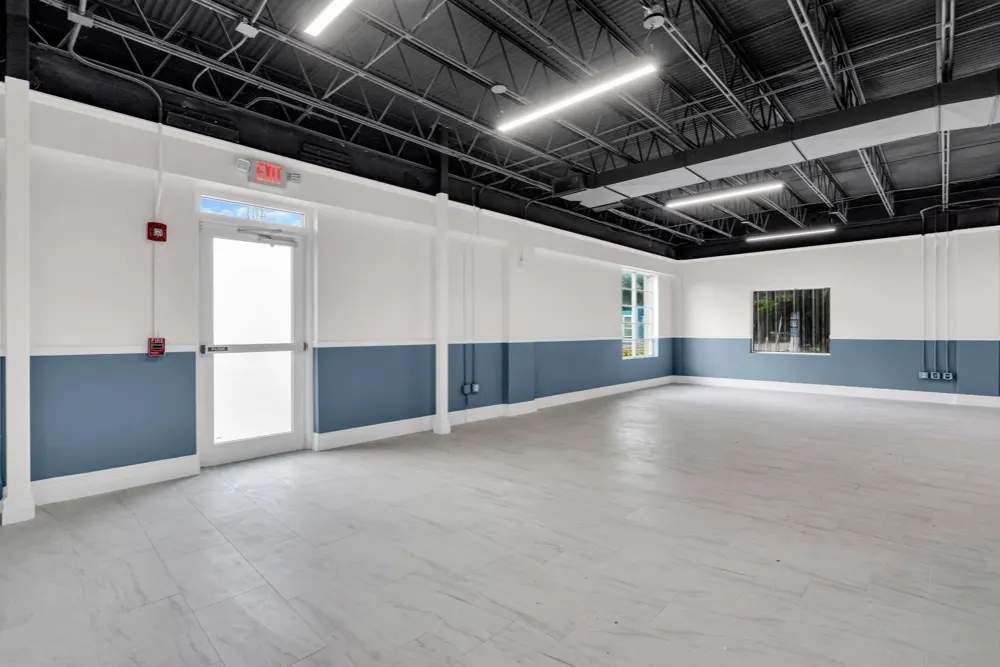
Quick answer: a grey or cold shell is structure and stubs only; a warm shell adds HVAC, electrical, restrooms and sprinklers; a white box or vanilla shell is generally a warm shell with drywall, ceiling, lighting and an accessible restroom finished; second-generation space was already built out for your use. Each step toward finished cuts your buildout budget, and the lease exhibit's written spec, not the label, is what you are actually getting.
The four conditions, defined
| Condition | Landlord typically delivers | You typically build |
|---|---|---|
| Grey shell (cold shell, dark shell) | Structure, roof, storefront glazing, demising walls, utility stubs | Everything else: HVAC distribution, electrical distribution, plumbing and restrooms, ceiling, lighting, flooring, walls, finishes |
| Warm shell | HVAC, electrical service and panel, restrooms, sprinklers, demised walls, often ceiling grid | Flooring, paint, lighting layout, interior walls, casework, branding |
| White box (vanilla shell, white shell) | Warm shell plus basic drywall, finished accessible restroom, ceiling, lighting, concrete floor ready for covering | Your layout: interior walls and doors, finishes, millwork, specialty systems |
| Second-generation space | A previous tenant's complete buildout for the same use | Updates, rebranding, and whatever the previous build got wrong |
Where these definitions come from. The terms are industry-standard and corroborated across published glossaries including Billd, a construction finance company, but usage genuinely varies by region and landlord: one landlord's "vanilla shell" is another's warm shell with no restroom. That is why the questions at the bottom of this page matter more than the vocabulary.
What each step costs, roughly
No institutional survey publishes shell-to-occupancy deltas, so treat the available figures as typical industry estimates. BuilderMuse's 2026 strip-mall construction guide puts the vanilla-box package on top of a cold shell, meaning the rooftop HVAC unit, electrical panel and distribution, an accessible restroom, ceiling, lighting and slab work, at an added $30 to $70 per square foot. The same guide puts tenant finish from a warm shell at $50 to $70 per square foot for plain retail and $150 to $300 for a full-service restaurant, which is the infrastructure gap our restaurant cost guide explains in detail. For offices, JLL's institutional benchmarks in our office cost guide describe the full fit-out once the shell question is settled.
Second generation: the shortcut with a catch
Second-generation space, already built out for your use, is where the big savings live. ICSC coverage puts a like-use repurpose at roughly half the cost and a third of the time of building out a new category; Nation's Restaurant News reports franchisees saving up to 50 percent of their initial investment; Modern Restaurant Management notes that reusing a hood, grease trap or HVAC system can save more than $100,000. The catch is twofold. First, you inherit the previous build's condition, so the walkthrough matters: a tired rooftop unit is your problem on day two. Second, if the space was built for a different use, you may be looking at a change of occupancy, which can trigger code upgrades that erase the apparent bargain. We check both before you commit.
Questions to ask before you sign
- Can I have the delivery condition as a written spec? Labels are marketing; the lease exhibit is binding. Get tonnage, panel size, restroom status and ceiling condition in writing.
- What as-built drawings exist? Good as-builts cut design time and surprises. None at all is a pricing signal.
- Who owns the existing systems' condition? If the "delivered" HVAC fails in month two, the lease decides whose checkbook opens.
- Does the allowance match the condition? A generous-sounding allowance against a grey shell can be worth less than a modest one against a white box. Our TI allowance guide covers that arithmetic.
- Will a contractor walk it with me before signature? Ours will, free. Fifteen minutes with a flashlight above the ceiling grid has saved tenants from years of expensive leases.
Shell condition questions
What is a grey shell or cold shell?
A grey shell, also called a cold shell or dark shell, is the rawest delivery condition: structure, roof, storefront glazing, demising walls and utility stubs only. There is no HVAC distribution, no interior electrical distribution, no plumbing fixtures, no ceiling, no flooring and no restrooms. It usually carries the cheapest rent and the most expensive buildout.
What is a warm shell?
A warm shell adds the building systems: the landlord delivers HVAC, electrical service and panel, restrooms, sprinklers, demised walls and often a ceiling grid. The tenant adds flooring, paint, lighting layout, casework and branding. It is the middle ground between a grey shell and a finished suite.
Is a white box the same as a vanilla shell?
The terms white box, white shell and vanilla shell are generally used interchangeably: basic drywall, a finished accessible restroom, ceiling, lighting, HVAC and a concrete floor ready for covering. But usage varies by region and by landlord, so never rely on the label. The delivery spec in the lease exhibit is the only definition that counts.
How much more does a grey shell cost to build out?
Industry estimates from BuilderMuse's 2026 strip-mall guide put the vanilla-box package that sits on top of a cold shell, including the rooftop unit, panel and distribution, accessible restroom, ceiling, lighting and slab, at an added $30 to $70 per square foot, and finishing a warm shell to occupancy at $50 to $70 per square foot for plain retail versus $150 to $300 for a full-service restaurant. Those are industry estimates rather than survey data, but the direction is reliable: every system the landlord does not deliver becomes your budget.
What is second-generation space?
Space previously built out for the same use you intend, such as a former restaurant for a new restaurant. The published sources converge on big savings: roughly half the cost and a third of the time versus building out a new category per ICSC coverage, and reusing an existing hood, grease trap or HVAC can save more than $100,000 per Modern Restaurant Management.
What should I ask the landlord about delivery condition?
Ask for the delivery condition as a written spec, not a label: what HVAC tonnage and distribution exists, the electrical service and panel capacity, whether restrooms are built and accessible, what the ceiling and lighting situation is, whether the slab is ready for flooring, and what as-built drawings exist. Then have a contractor walk the space against your plans before you sign. Our walkthrough is free.
Free on-site estimates
Touring spaces? Bring a contractor's eyes.
We walk candidate spaces with you before you sign and tell you what each one will really cost to open in. No obligation.
- Written pricing
- Permits handled
- 3-Year warranty