
Cost guide · Updated for 2026
Restaurant buildout cost in 2026: what the numbers really say
Published ranges, the one real survey, and the decision that moves your cost more than any finish: first-generation or second-generation space. Every figure names its source, and we built the Fresh Monkee in Sarasota, so this is not theory.
- $200 to $480QSR construction /SF, 2026
- Up to 50%Second-gen savings
- 1,872 SFOur Sarasota restaurant build
- FreeWritten estimates
Quick answer: 2026 industry-published construction ranges run roughly $200 to $480 per square foot for quick-service and $250 to $400 for full-service restaurants (GrowthFactor), with equipment and furniture on top. Second-generation space with an existing hood, grease trap and kitchen infrastructure can cut the project by a third to a half (ICSC, Nation's Restaurant News). The space you pick matters more than the finishes you choose.
The published numbers, graded honestly
Restaurant buildout pricing has one real survey and a lot of industry estimates. We publish both and tell you which is which.
| Figure | Published number | Source and year |
|---|---|---|
| Quick-service construction | $200 to $480 per sq ft | GrowthFactor, 2026 (industry analysis) |
| Full-service construction | $250 to $400 per sq ft | GrowthFactor, 2026 (industry analysis) |
| Kitchen package alone | $75,000 to $500,000+ | GrowthFactor, 2026 |
| Median startup cost, independent operators | $375,000 total; $113 per sq ft; $3,586 per seat | RestaurantOwner.com member survey, 2018 (the only true survey; 2018 dollars) |
| Remodel a former restaurant vs build new | $275,500 median vs $650,000 median | RestaurantOwner.com survey, 2018 |
| Finish a warm shell: restaurant vs plain retail | $150 to $300 per sq ft vs $50 to $70 | BuilderMuse strip-mall guide, 2026 (industry estimate) |
Where these numbers come from. The RestaurantOwner.com figures are a real member survey of more than 350 independent operators, reported in November 2018; treat them as 2018 dollars. The 2026 ranges are from GrowthFactor, a retail real estate analytics firm, and BuilderMuse; they are industry estimates rather than survey data, and we label them that way on purpose. The written estimate we prepare after walking your space, with your equipment plan in hand, is the real number.
The biggest cost decision: first-generation or second-generation space
A second-generation space is one that was already a restaurant. The hood, the grease interceptor, the gas service, the floor drains and the heavy electrical are already there, and reusing them is where the money is. The sources converge from different directions:
- ICSC reporting puts a like-use repurpose at roughly half the cost and a third of the time of building out a space for a new category.
- Nation's Restaurant News reports franchisees saving up to 50 percent of their initial investment in second-generation space and opening in about 3 months instead of 6 to 9.
- Modern Restaurant Management reports that reusing an existing hood, grease trap or HVAC system can save more than $100,000 on its own.
- The RestaurantOwner survey medians agree: $275,500 to remodel a former restaurant versus $425,500 for a non-restaurant conversion and $650,000 for new construction.
The catch: converting a space that was never a restaurant is usually a change of occupancy, which can trigger new-construction egress compliance and other code upgrades. We flag that before you sign, not after.
Why restaurants cost more than retail
Three systems separate a restaurant from the retail suite next door, and all three carry their own reviews:
- The hood. Grease-producing cooking needs a Type I hood with makeup air and a fire suppression system, reviewed by the fire authority. It is the heart of the kitchen's mechanical cost.
- The grease interceptor. Local sewer authorities in Sarasota and Manatee counties run fats-oils-grease programs that require interceptors for food service and regulate how often they are pumped. Installing one where none exists can mean cutting floor slab or site work.
- State plan review. Florida's DBPR Division of Hotels and Restaurants requires plan review before licensing a food service establishment that is newly built, converted from another use, remodeled, or reopened after 18 months closed. It runs alongside the local permit covered in our permits guide.
What we actually built
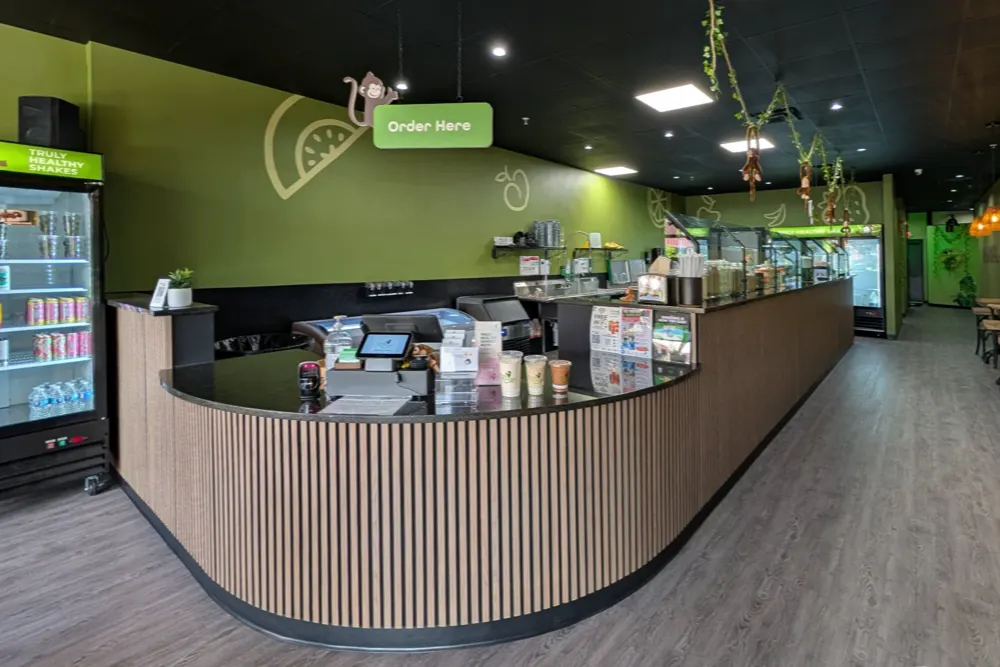
Our Fresh Monkee buildout in Sarasota took an 1,872 square foot space to a finished, open-for-business restaurant: service counter, seating, restroom and front-of-house finishes, delivered under one written scope. The restaurant buildout service page covers the full scope we carry: kitchens, hoods, dining rooms, bars and the inspections between you and opening day.
Budgeting advice we give before the lease
- Walk the infrastructure, not the dining room. The hood, grease, gas, power and floor drains decide your budget. Paint does not.
- Price the space before you sign. A free walkthrough and written scope turns the landlord conversation into numbers.
- Count equipment separately. Published all-in figures mix construction with kitchen packages that vary tenfold. Keep the two budgets separate and honest.
- Plan the approvals as schedule, not paperwork. DBPR review, the building permit, fire review and health inspection all sit between construction finish and revenue. They belong on the same timeline as the framing.
Restaurant buildout cost questions
What does a restaurant buildout cost in 2026?
Industry-published 2026 construction ranges run about $200 to $480 per square foot for quick-service concepts and $250 to $400 for full-service dining rooms, per retail analytics firm GrowthFactor, with all-in figures including furniture and equipment running higher. Those ranges are industry-reported rather than survey-backed. The only true published survey, RestaurantOwner.com's 2018 member survey of 350-plus operators, found a median of $113 per square foot and $3,586 per seat in 2018 dollars. Starting condition moves the number more than any other factor.
How much does second-generation restaurant space save?
A lot, and the sources agree. ICSC and Nation's Restaurant News coverage puts a like-use conversion at roughly half the cost and a third of the time of building out a new category, and Modern Restaurant Management reports that reusing an existing hood, grease trap or HVAC can save more than $100,000. The RestaurantOwner survey showed the same pattern in actual medians: $275,500 to remodel a former restaurant versus $650,000 for new construction.
What do a hood system and grease trap add to the cost?
They are the infrastructure that separates a restaurant from a retail buildout. A Type I hood with makeup air and fire suppression, a correctly sized grease interceptor, and the kitchen's mechanical, electrical and plumbing density are the main reasons published restaurant ranges sit far above plain retail. Exact costs depend on the kitchen line and the building, which is why we price them from your equipment plan rather than a chart.
Does Florida require a state plan review for restaurants?
Yes. The DBPR Division of Hotels and Restaurants requires plan review before licensing a food service establishment that is newly built, converted from another use, remodeled, or reopened after being closed at least 18 months. That review runs alongside the local building permit, and we plan both into the schedule.
What did it cost to open a restaurant per the only published survey?
RestaurantOwner.com's member survey, reported in November 2018, found a median total startup cost of $375,000, a median of $113 per square foot, and $3,586 per seat, on a median space of 3,070 square feet and 120 seats. Treat those as 2018 dollars; construction costs have risen substantially since.
How do I get a real price for my restaurant space?
Send the form with your location and concept. We walk the space, check what infrastructure exists, and give you a written scope and price. If you are choosing between two spaces, we can walk both; picking the space with the right bones is the biggest cost decision you will make.
Free on-site estimates
Ready to price your restaurant buildout?
Tell us about the space and the concept. The licensed contractor walks it with you, checks the infrastructure, and gives you a written scope and price. No obligation.
- Written pricing
- Permits handled
- 3-Year warranty